Dublin Core
Title
Description
About the Artist
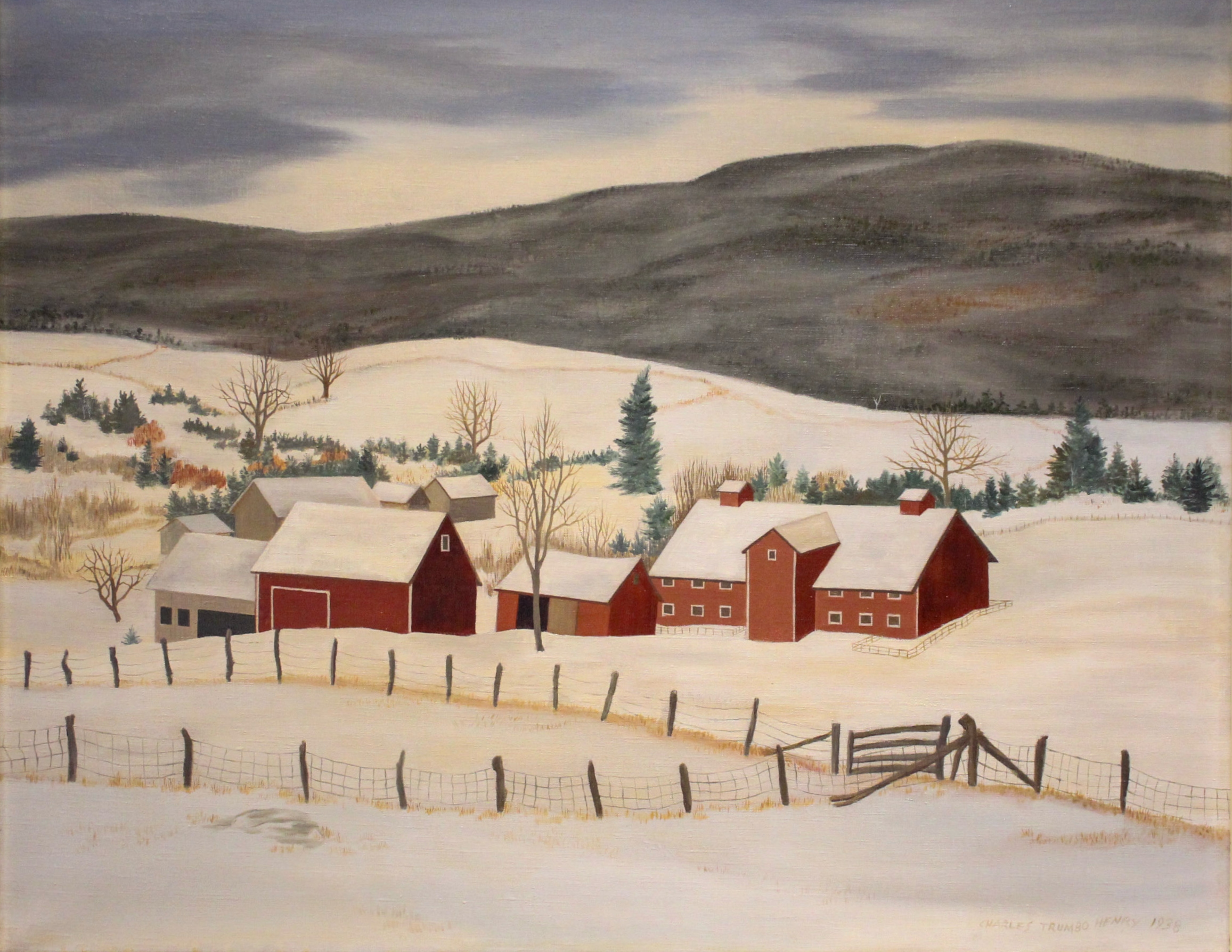
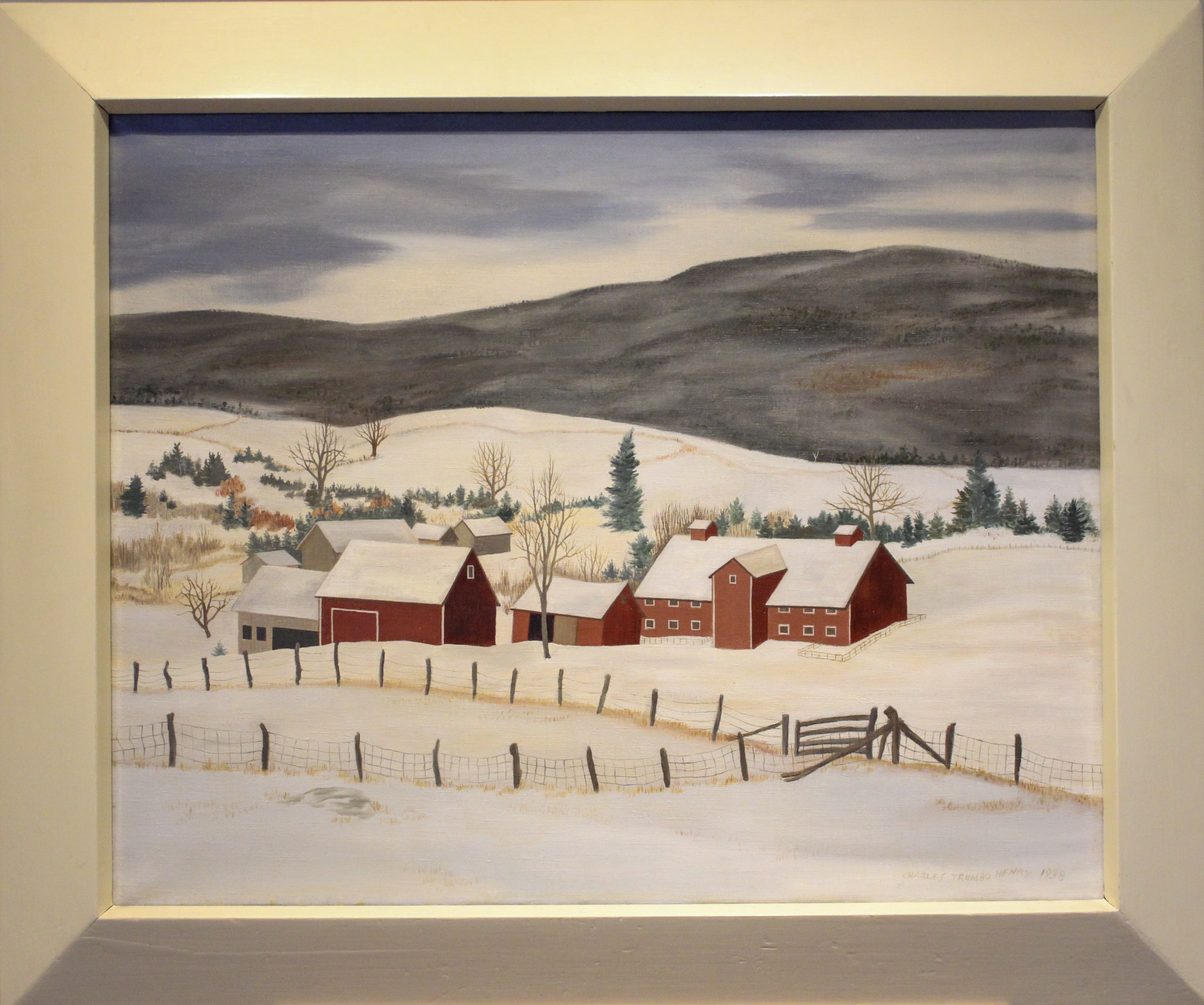
Charles Trumbo Henry was born in Niagara Falls, NY in 1902. He grew up in Missouri and studied art at the Missouri State Teachers College (today, Truman State University) and the Kansas City Art Institute. Henry moved to New York in the late 1920s to study at the Art Students League, an organization with which he maintained a long connection and leadership role. He was a painter known for his colorful depictions of American landscapes, informed by a regionalist sensibility. “Young painters in New York are going back to their homes in the middle west to paint the country they know,” he wrote in 1933 (“Charles Henry Exhibits”). Henry was employed first by the Public Works of Art Project and then the Federal Art Project, spanning the years 1935 to 1943. He exhibited works in the Whitney Museum in New York City, the Pennsylvania Academy of Fine Arts, National Academy of Design, and the Carnegie Institute, among other venues. In 1937 Henry was selected to create a mural for the Department of Labor in Washington, D.C., featuring construction of the Triborough Bridge at Hell Gate. A year later, he was selected for a project that became a mural located in the U.S. post office in Cornelia, GA. That led to an unusual nine-month assignment at the federal penitentiary in Atlanta, where he taught art workshops, developed a vocational program, and even consulted on the paint colors for various rooms (“Charles Henry on New Art Projects”). After WWII Henry and his family moved to Los Angeles, where he continued to paint but of economic necessity also became lead fundraiser for a cancer not-for-profit (“Sunday’s Painter”). One review of a 1949 solo show in New York suggested that “Henry keeps his colors low in key, and his delicate gift of factual observation never fails him when the object being looked at is at close hand” (S.P.). 2 works at Smithsonian American Art Museum. 4 images at FAP.
Works Consulted: “Charles Henry Exhibits Work in New York,” Kirksville Daily Express 27 Aug. 1933: 4; “Charles Henry on New Art Projects,” Kirksville Daily Express 7 Feb. 1939; “Sunday’s Painter One-Man Show Depicts Landscapes,” Los Angeles Daily News 27 Jan. 1951: 4; S.P., “2 One-Man Shows Mark Art Scene,” New York Times 24 June 1949: 21 Link
Creator
Publisher
Date
Contributor
Cooper, Ken (biography)
Helquist, Morgan (photography)
Source
Object #FA 20641
Format
jpeg, 941 KB
Type
Still Image Item Type Metadata
Original Format
Physical Dimensions
Frame: 36 5/8 x 30 3/4 in.