Dublin Core
Title
Description
About the Artist
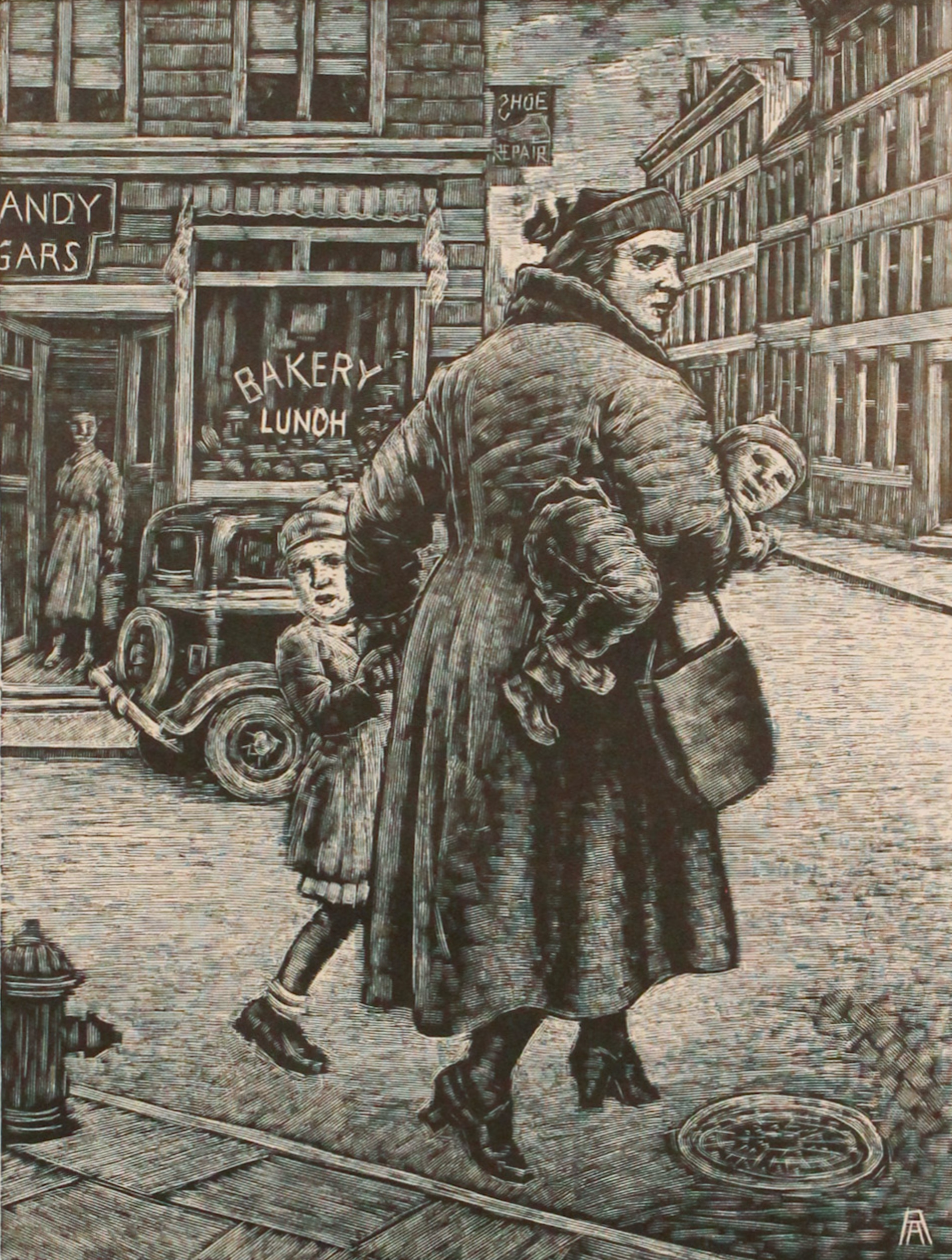
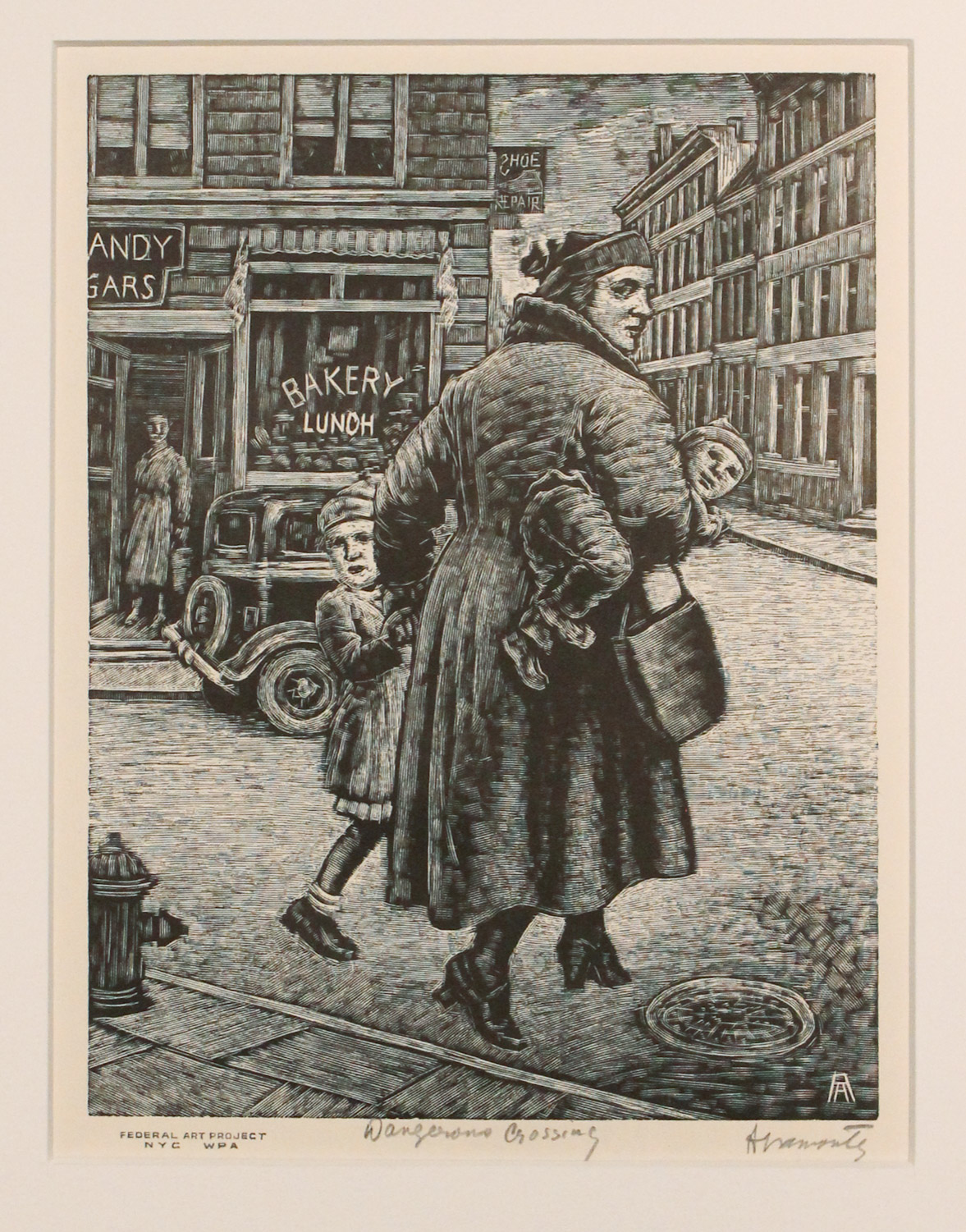
Albert Abramovitz was an American painter and printmaker known for his expressive woodcuts and socially conscious imagery. He was born in Riga, Latvia, to a Jewish family. Abramovitz received early artistic training in Odessa before continuing his studies in Paris at the Académie de la Grande Chaumière. During his time in Europe, he gained recognition by exhibiting at major salons, and he would win the Grand Prize at the 1911 Universal Exposition. He later joined the jury of the Salon d’Automne in 1913. In 1916, Abramovitz immigrated to the United States, where he spent the remainder of his career. He held his first solo exhibition in Manhattan, in 1921, and later lived in Los Angeles before returning to Brooklyn. He produced prints that reflected political and social realities that were topical. An early reviewer wrote of his painting that, “though varied in subject, it is animated by a single high ideal—the earnest search for a higher truth than dwells on the surface of things” (Anderson). His work became more closely associated with the social and economic struggles of the early 20th century, particularly during the Great Depression. Abramovitz worked for the Federal Art Project during this time, specifically under the Graphic Arts Division, creating prints that were social commentaries on the state of the world. Through wood engravings and linocuts, he depicted unemployment, urban hardship, and everyday life, often emphasizing themes of poverty and resilience. His works were often praised for their subtle theming, and at the time, he was considered a master at his craft due to this, as well as for his skill in creating engravings with such fine detailing. His art frequently carried strong emotional and symbolic elements, sometimes addressing disaster, human suffering, and adversity. Abramovitz died in 1963 in New York. Today, he is remembered as an important figure in American printmaking, particularly for his ability to combine technical precision with powerful social commentary. 65 works at GSA Fine Arts Collection. 23 works at Brier Hill Gallery. 21 works at The Metropolitan Museum of Art. 10 works at Victoria and Albert Museum. 8 works at the National Gallery of Art.6 works at The Annex Galleries. 2 works at Smithsonian American Art Museum. 1 work at Spencer Museum of Art. 1 work at Ben Uri Gallery and Museum. 4 images at FAP. 6 images at GSA.
Works Consulted: Who Was Who in American Art, ed. Peter Falk (1985) Link; Annex Galleries, “Albert Abramovitz” Link; Antony Anderson, “Albert Abramovitz in Varied Exhibit” (Los Angeles Times 6 Dec. 1925: 43) LinkCreator
Publisher
Date
Contributor
Helquist, Morgan (photography)
Source
Object #FA 1066
Format
jpeg, 644 KB
Type
Still Image Item Type Metadata
Original Format
Physical Dimensions
Framed: 15 x 18 in.