Invisible Labor

This group of five online exhibits draws from a new long-term loan of 180 artworks from the U.S. General Services Administration (GSA) to the New Deal Gallery, many of which have not been publicly exhibited since their original display. Two are paintings returning to Mount Morris, where they join a permanent loan collection of 223 original artworks already on site. Several of the newly loaned works are especially meaningful because they were originally installed in tuberculosis hospitals and now join a collection explicitly constituted for the purpose of healing. In a 1937 report the Federal Art Project’s New York Director, Audrey McMahon, cited the “therapeutic value of art” in its allocation of 500 works to state tuberculosis hospitals, although the paintings’ decorative qualities likely were more observable (“WPA Art”). Recent medical studies on the relation between art and wellness, however, have long since abandoned the placebo effect hypothesis to explore demonstrable impacts upon patients, visitors, and caregivers alike (see for example Barnett and Vasiu; Foster, et al.; Stellar, et al.). So in this particular sense we are only beginning to understand—or perhaps finally remembering—how art works.
Massive unemployment during the Great Depression, estimated to be 25% of the paid labor force, had the effect of revealing many other kinds of work. Families with two wage earners found themselves stymied by policies of the Works Progress Administration (WPA) mandating that, in order to spread relief most broadly, only one family member could be enrolled in that program. Women’s work often reverted to an unpaid netherworld. In 1937 a young artist named Anchel Harold Rosenberg changed his name to “Harold Anchel” so that he might enroll in the Federal Art Project (FAP)—otherwise, he would have been the family’s illegal second worker. His first government job was counting chickens, before he was accepted into the FAP’s graphic arts division. Prior to his paid work, Anchel had performed with the radical New Dance Group, whose motto asserted that “Dance is a Weapon of the Class Struggle.” Once he began creating prints, that social awareness shifted mediums, but his dance background made him effective at conveying inner feelings through subtle gestures. Here, a lithograph simply entitled News reveals a network of economic, interpersonal, and psychic dimensions involving work. It’s just a matter of looking thoughtfully at art from this period and then recognizing the work that it depicts or enacts.
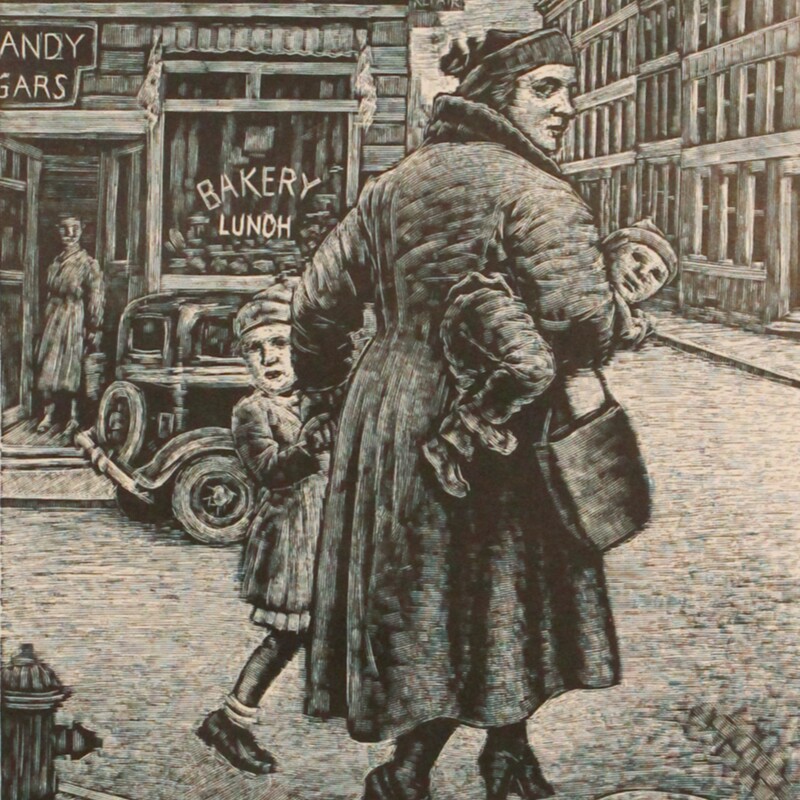
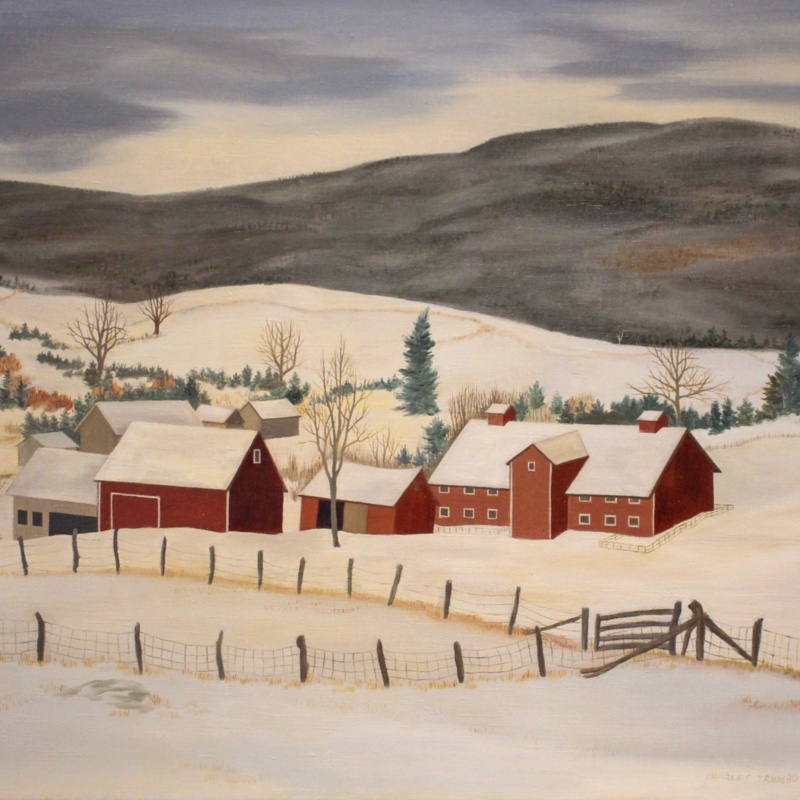


A Painting’s Work Is Never Done furthermore suggests that visual art does more than simply preserve a record of the past; it still shapes how viewers look, feel, and make meaning in the present. Every painting confirms or, more likely, asks us to reevaluate our relation to the world we know. Forgotten genealogies are recovered and surprising moments of recognition occur. Some forgotten innovations of the Great Depression, like government support for the work of artists, directly map on to analogous concerns amidst the uncompensated theft of artistic labor by generative AI. Other connections are less direct, like how the pleasures of landscape painting have informed our understanding of nature—and by implication, built environments—or even function as what we now know as virtual worlds. Student researchers developed lines of inquiry that invite contemporary viewers into active dialogue with a remarkable period of artistic work, largely subordinated in historical accounts to stock market crashes and Dust Bowl spectacle.
A final type of (usually) invisible labor is important to acknowledge: the work of preserving art objects. Throughout 2025, massive layoffs and budgetary cuts imperiled the federal agencies entrusted with art conservation (Akers; Capps; DePillis). Five regional offices of the GSA were closed and about half of its staff dedicated to art preservation were placed on leave with intent to terminate. 46 properties were identified for “accelerated disposal” via sale to private parties, including many with historic WPA-era murals (Whitehouse). An estimated 23,000 works from the New Deal era are potentially at stake; in fact, the Sabalauskas painting shown above had disappeared from Mount Morris before its location and return, thanks to the GSA’s Art Recovery Project. All it takes is a single rupture in the work of stewardship to make a piece of art disappear forever. A story map on the next page explores the material afterlife of FAP paintings and prints at the New Deal Gallery; a final page expresses our gratitude for all the caretakers who have helped to make this project a reality.
Works Consulted
-- Akers, Torey. “Trump Layoffs Leave More Than 26,000 Government-Owned Artworks in Limbo.” The Art Newspaper 18 Mar. 2025.
-- Barnett, Kelly Sarah, and Fabian Vasiu. “How the Arts Heal: A Review of the Neural Mechanisms Behind the Therapeutic Effects of Creative Arts on Mental and Physical Health. Frontiers in Behavioral Neuroscience 18 (2024):1422361. Link
-- Capps, Kriston, Ben Brasch, and Samantha Chery. “Trump Administration Slashes Division in Charge of 26,000 U.S. Artworks.” Washington Post 11 Mar. 2025.
-- DePillis, Lydia, Graham Bowley, and Robin Pogrebin. “Trump Cuts Leave Few Caretakers for a Massive Federal Art Collection.” New York Times 8 June 2025.
-- Foster, Marcel W., et al. “The Effects of Viewing Visual Artwork on Patients, Staff, and Visitors in Healthcare Settings: A Scoping Review.” PLOS One 20 Aug. 2025. Link
-- Stellar, Jennifer E., et al. “Viewing Art as a Pathway to Psychological Well‐being and Physical Health. Applied Psychology: Health & Well-Being 18.1 (2026): 1–20. Link
-- Whitehouse, Sheldon, and Charles Schumer. “Letter to Hon. Ed Forst, GSA Administrator.” 11 Mar. 2026. Link
-- “WPA Art Influence for Education Cited.” New York Times 1 Nov. 1937: 18. Link